Most people picture Greece as islands and beaches. Riders find something else entirely: a mainland dominated by mountains, where the road climbs from sea level to two thousand metres in a morning and the coast reappears in the afternoon. The Pindus range runs down the spine of the country, and the roads through it are empty, technical and spectacular.
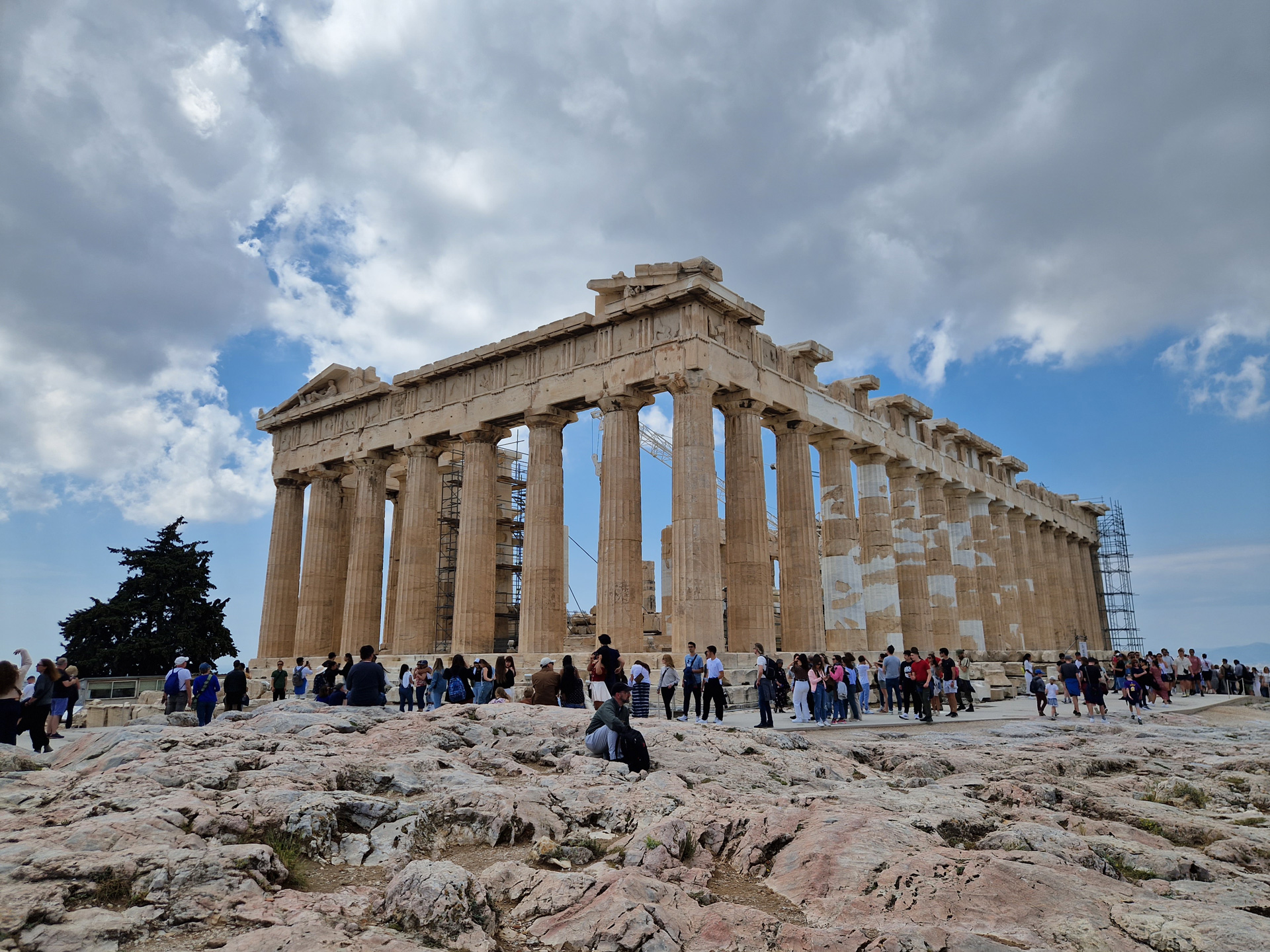
What sets Greece apart from a pure mountain trip is what sits alongside the riding. You pass UNESCO monasteries perched on sandstone pillars, the ancient oracle at Delphi, and harbour towns where dinner is whatever came off the boat that afternoon. It is a country where the stops are as good as the road between them – and after a long riding day, that matters.
We run Greece both ways, and they are not variations of the same trip.
The on-road tour is touring in the classic sense: coastal roads, mountain passes, comfortable hotels and time at the archaeological sites. It suits any rider confident on a large adventure bike, and it is passenger-friendly.
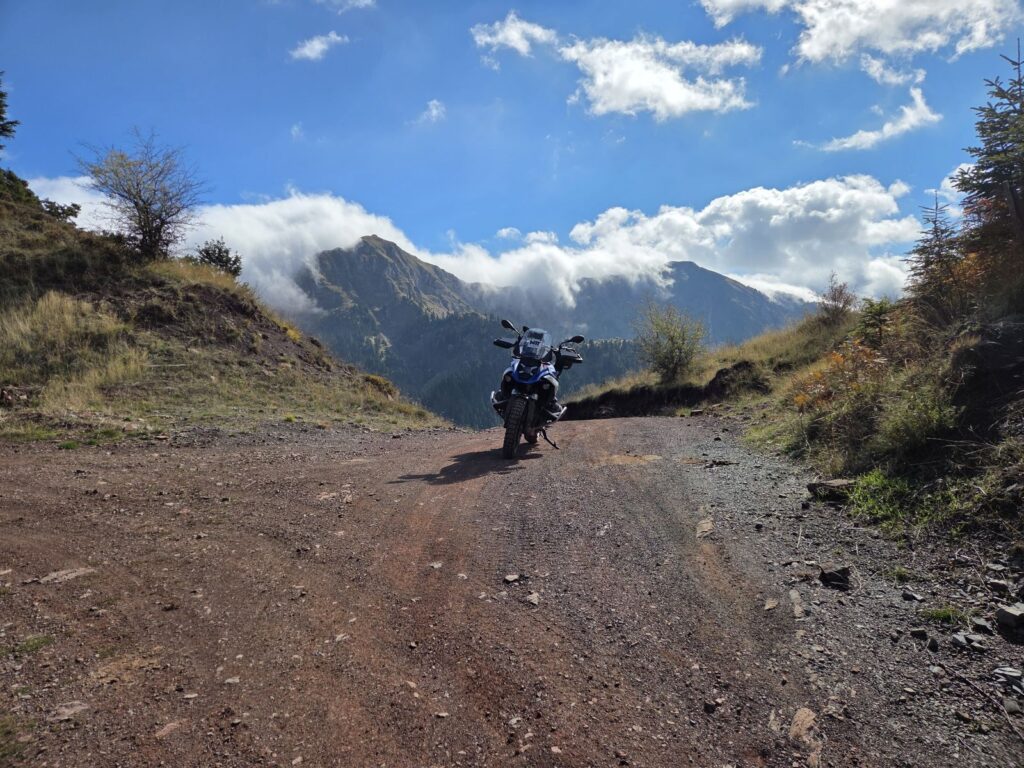
The gravel tour is the opposite end of the scale – around seventy percent off-road, threading through the Pindus on forestry tracks and mountain trails, with technical climbs, loose rock and real exposure. That one asks for genuine dirt experience. If you have it, it is some of the best off-road riding in southern Europe.
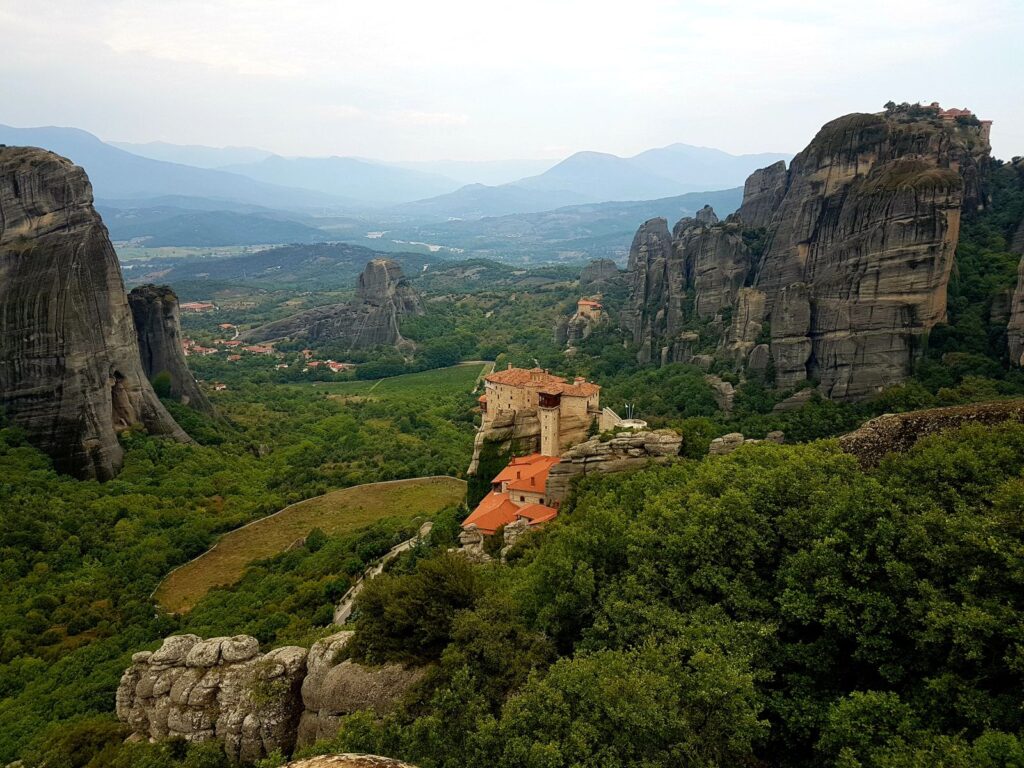
The landmarks here are not detours – they sit directly on the good roads. Meteora is a UNESCO World Heritage site where Orthodox monasteries stand on sandstone towers up to four hundred metres high, reached by small winding roads that are a pleasure in themselves. Delphi, built in the sixth century BC and home to the Temple of Apollo, sits on a mountainside above the Gulf of Corinth.
South of the canal, the Peloponnese peninsula delivers the coast road through the stone villages of the wild Mani, the Byzantine fortress town of Monemvasia, and Ancient Olympia where the Games began. Riding here, the history is simply part of the route.
One practical advantage of Greece: the riding season stretches well beyond the Alps and the Carpathians. Spring comes early and autumn stays warm, which makes it a strong choice for a trip in May or October when the high passes further north are still closed or already shutting.
Our departures are timed for those windows deliberately – comfortable temperatures, open mountain roads, and the tourist season either not yet started or already finished.

 7 days