The Balkans are the last part of Europe that still feels genuinely unexplored on a motorcycle. In a single week you can cross five borders, climb from sea level to snow-capped passes over 2,500 metres, and ride roads where the surface changes character every hour. There are stretches here where you will not see another vehicle for forty minutes.
We run these routes out of Romania, which means the whole region is our backyard rather than a destination we fly into. Our tours cross Serbia, Montenegro, Bosnia, Albania, North Macedonia, Bulgaria and Croatia in different combinations, each built around the passes and coastlines that make the ride, not the fastest line between two hotels. Maximum 8 motorcycles, experienced guide, support van for the luggage, and 24-hour technical backup across every border.
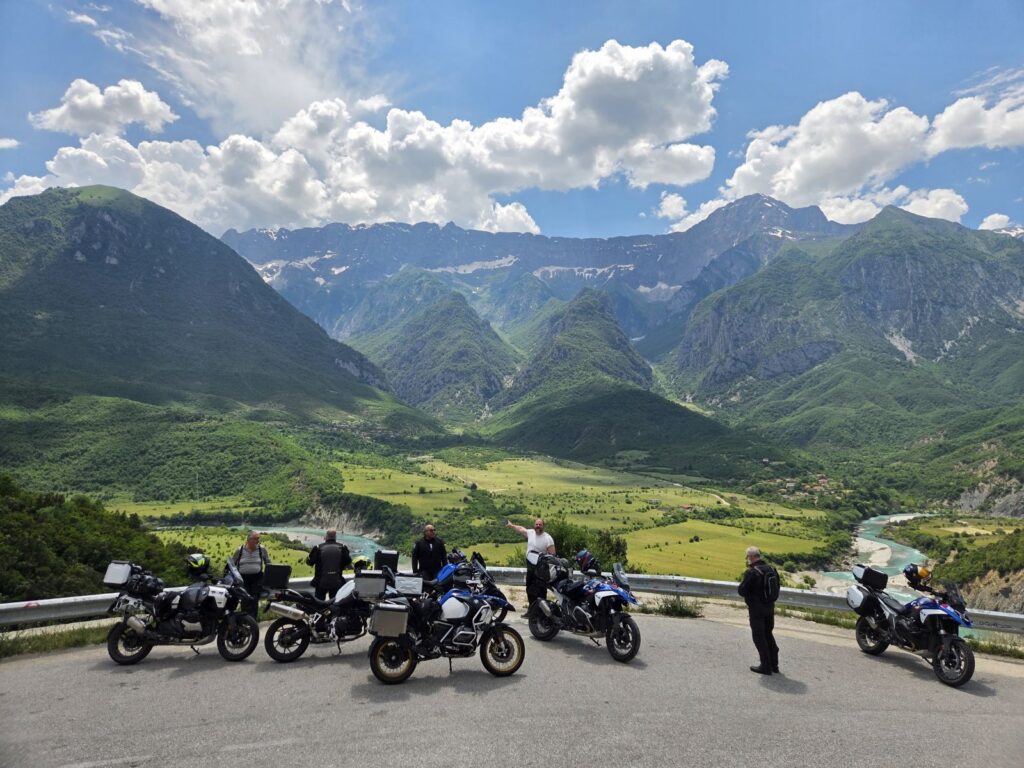
Durmitor National Park in Montenegro is a UNESCO-listed wilderness of glacial lakes and canyons, and the road through it is one of the great motorcycling roads in Europe – endless hairpins with almost nobody on them. Further south the Albanian Alps deliver something rawer and more remote, and the Gramoz Range on the Greek border holds snow above 2,500 metres well into the riding season.
Between them run the passes of Bosnia and Serbia, and further east the Balkan mountains of Bulgaria. These are roads that would be famous if they were three hundred kilometres west.
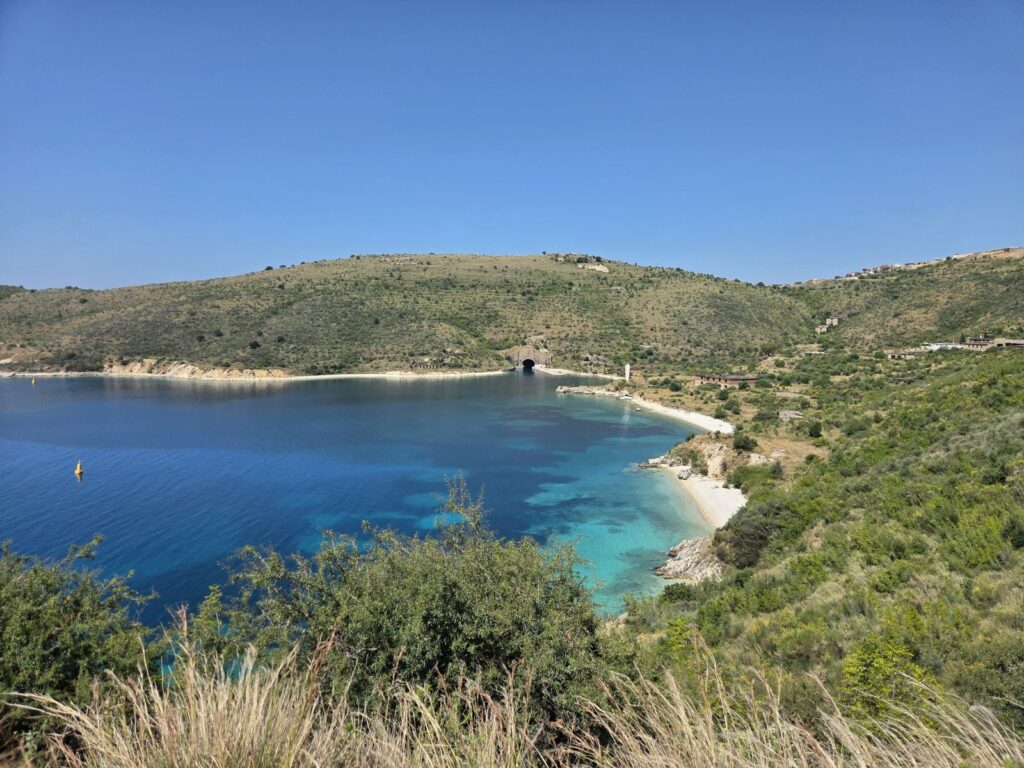
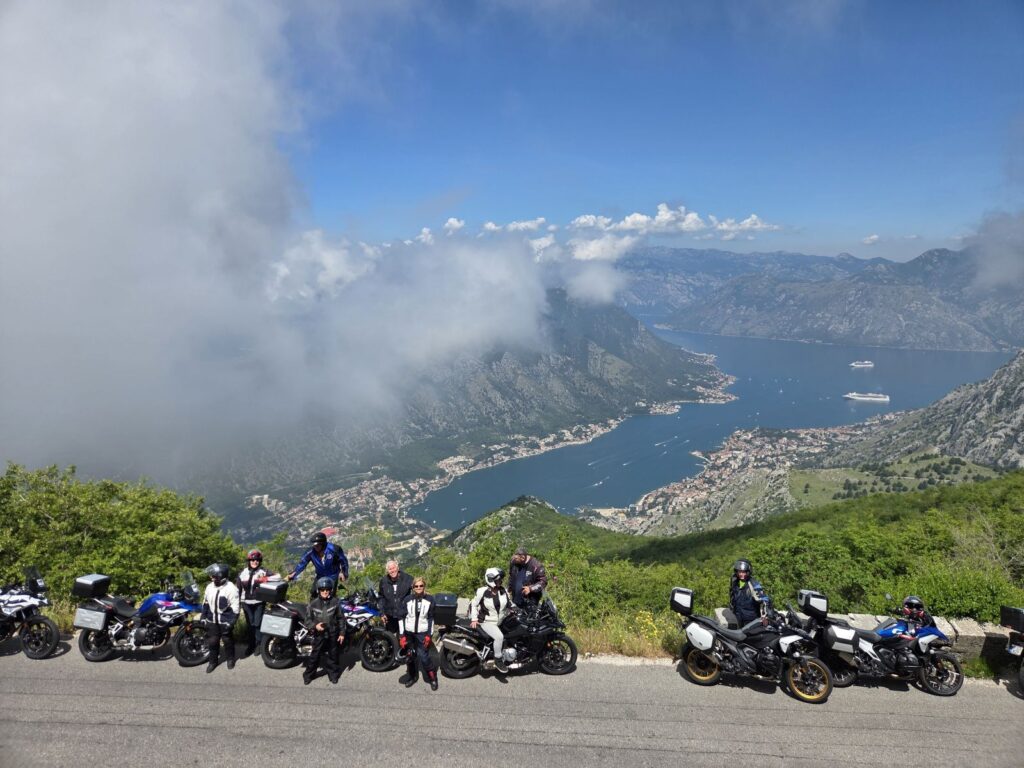
What makes a Balkans tour different from a pure mountain trip is the contrast. The same week that takes you over alpine passes also drops you onto the Adriatic and the Ionian, riding with the sea on one side and the mountains on the other. The Bay of Kotor is one of the most spectacular coastlines in the Mediterranean, and Lake Ohrid – the Pearl of the Balkans, and among the oldest lakes in Europe – is a UNESCO site you can walk around in the evening after the bikes are parked.
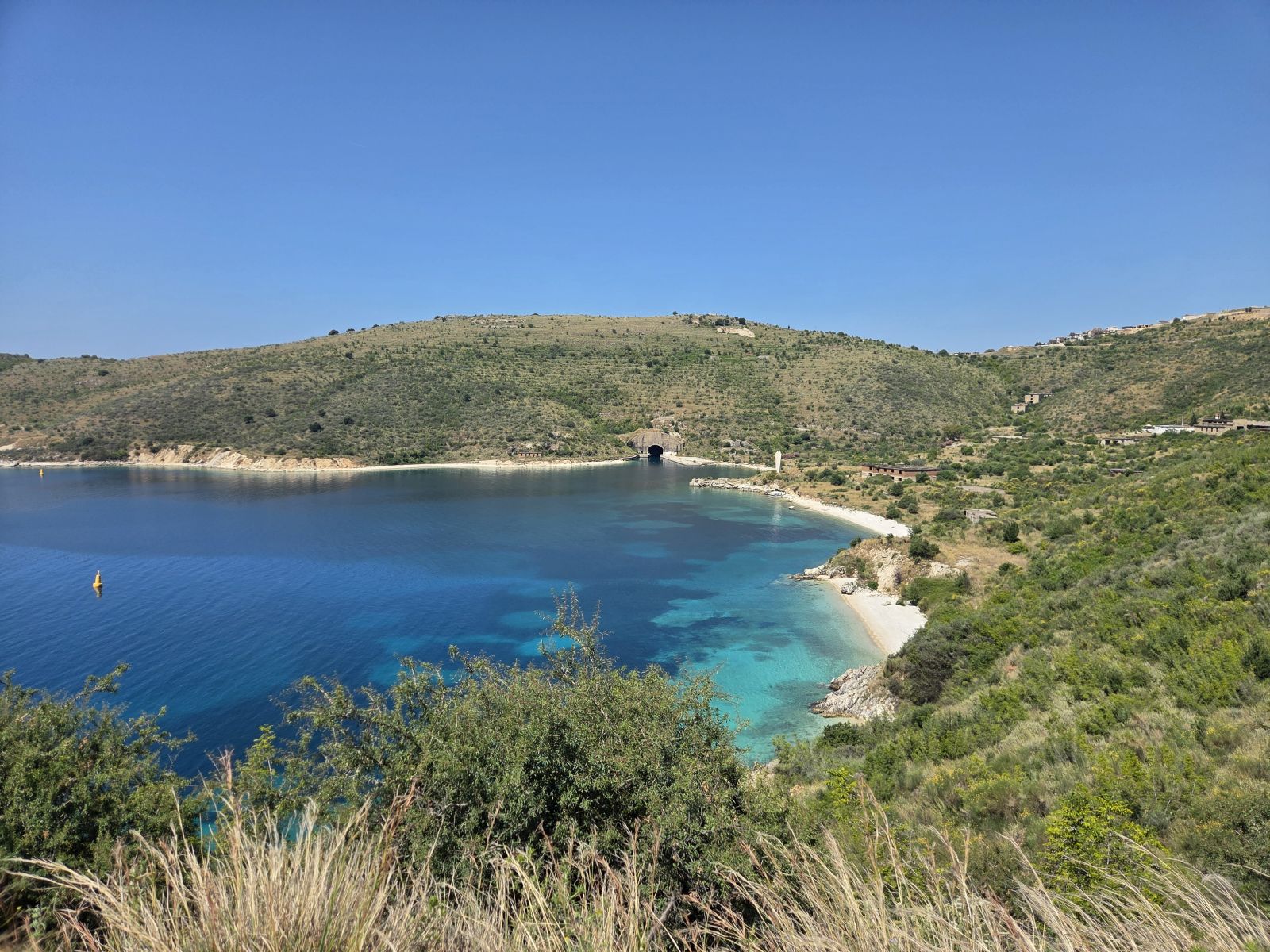
Medieval walled cities, communist-era bunkers, alpine snowfields and palm-lined beaches, all inside eight days.
Multi-country riding is the part that puts people off doing this trip alone: paperwork, insurance validity, currencies, border queues and the question of what happens if something breaks in a country where you do not speak the language. On a guided tour none of that is your problem. The bikes are insured for the whole route, the guide handles the crossings, and the support van follows with your luggage.
That is the real argument for riding the Balkans with a guide rather than solo – not that you could not do it, but that you will spend the week riding instead of organising.

 13 days